Technical Guide: Specifying and Installing Corner Bifold Door Systems
For the modern developer or installer, the “open corner” bifold is no longer a niche request; it’s becoming a standard requirement for high-end residential extensions. While standard bifold runs are straightforward, moving around a corner introduces structural and mechanical complexities that require a rigorous approach to surveying and fitting.
The Mechanics: Moving vs. Fixed Posts
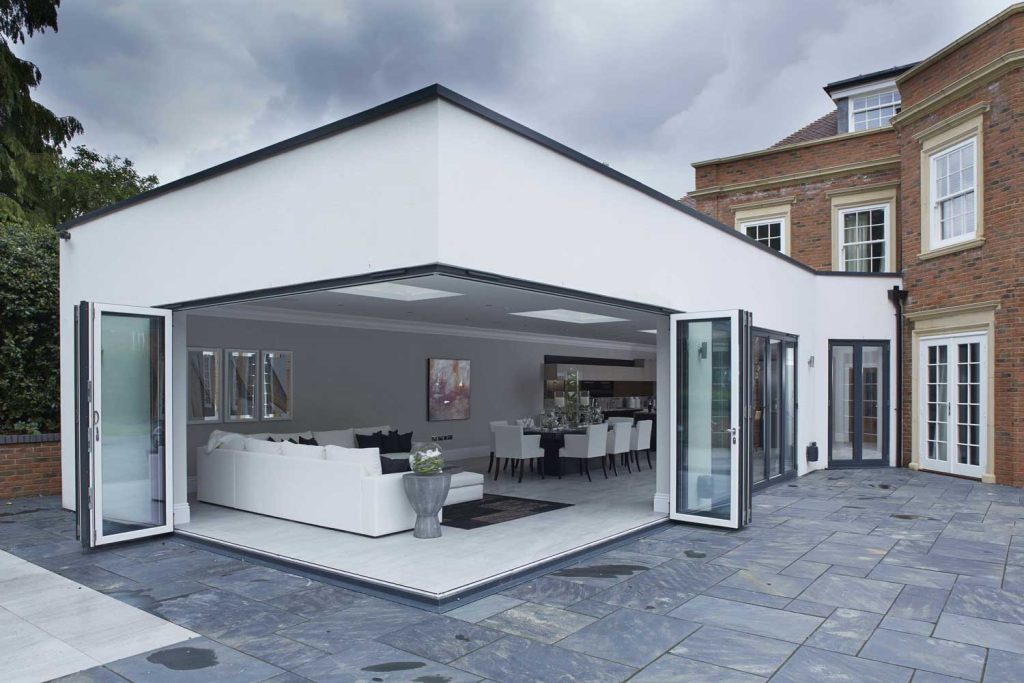
When a client asks, “Can bifold doors go around corners?” they are usually looking for a moving corner post solution.
- Fixed Post Systems: The doors are a permanent structural steel or brick pillar. This is a standard install, but it lacks the seamless “indoor-outdoor” flow that sells premium projects.
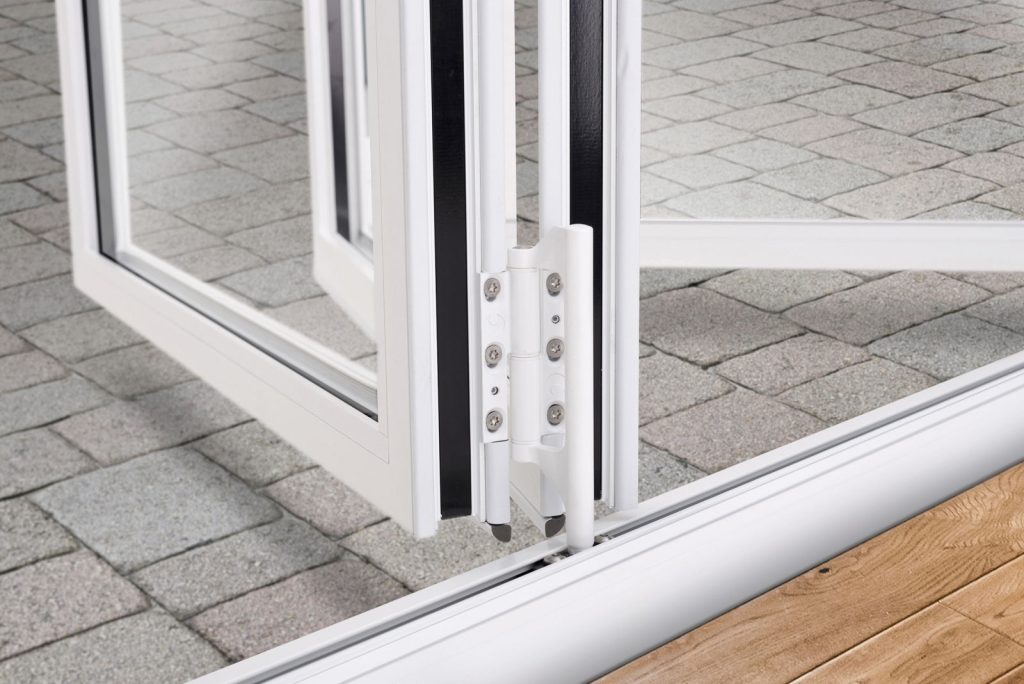
- Moving Post Systems: The corner post is physically attached to one of the lead door leaves. Using a specialised 90-degree meeting kit, the post slides away with the doors, leaving a cantilevered roof hanging with zero visible support.
Structural Considerations for the Trade
Success on-site starts long before the doors arrive. As an installer, your biggest risk is deflection.
- The Cantilever Requirement: You cannot install a moving post system without a cantilevered steel structure. The lintel must be engineered to support the weight of the roof/upper floor without relying on the door frame.
- Deflection Limits: If the overhead steel sags even a few millimeters after the doors are fitted, the moving post will bind, and the locks will fail to engage. We recommend a maximum deflection tolerance of 2-3mm under full load.
- Threshold Drainage: Corner bifolds often involve large expanses of glass. Ensuring a weathered track is correctly rebated with an integrated drainage solution is critical to preventing water ingress at the 90-degree junction.
Comparison: Standard Bifold vs. Corner Bifold Systems
| Feature | Standard Bifold Run | Corner Bifold (Moving Post) |
|---|---|---|
| Structural Support | Standard Lintel | Cantilevered Steelwork |
| Survey Complexity | Moderate | High (Laser Level Mandatory) |
| Lead Times | Standard (2-4 weeks) | Extended (Specialist Corner Kits) |
| Install Time | 0.5 – 1 Day | 1.5 – 2 Days |
| Locking Points | Linear Multi-point | Integrated 90° Hook Locks |
| Aesthetic Value | High | Ultra-Premium |
* Swipe left/right to view all columns on mobile devices.
Installation Best Practices: Avoiding the Call-back
To ensure a “fit and forget” installation for your client, keep these three technical factors in mind:
- Laser-Level Tracks: Because the two door sets must meet perfectly in the air at 90 degrees, there is zero room for error in the floor track. If one side is out of level by even 1mm per meter, the corner junction will not close flush.
- Thermal Expansion: Large aluminium profiles will expand and contract. When working with corner bifolds, ensure you leave adequate expansion gaps in the side jambs to prevent the corner post from “pinching” during summer months.
- The “Meeting” Kit: Always specify high-quality gaskets at the corner junction. The 90-degree seal is the most vulnerable point for air leakage; ensuring the compression is uniform from top to bottom is the hallmark of a professional install.
Partner with Reading Trade Windows
At Reading Trade Windows, we don’t just supply the glass; we provide the technical backup that trade professionals need. We supply premium aluminium systems designed specifically for corner applications, featuring high-security locking and superior thermal breaks.
Looking for a quote on your next open-corner project? Get in touch with our expert team today.
Tags: aluminium, corner bifold doors, developers, installers, technical guide, trade

About Steve
Steve has been with Reading Trade Windows for many years and has worked in the fenestration industry for even longer. His experience makes him a valuable asset to the team, and he is always happy to show his news, views and advice here on our blog.